AI Is Finding Our Dependency Bugs Faster Than We Can Patch Them
October 31, 2026 - Reading time: 4 minutes
If you run an ecommerce store, the last few months have felt different. Critical bugs keep landing in the code our shops sit on, and more of them are being found with the help of AI.
I work in ecommerce, so I've been watching two cases closely: the PHP2Shell flaws and StyleSmuggler in Adobe Commerce. They tell different halves of the same story.
The pace has changed
Google's Threat Intelligence Group reports that vulnerability disclosures roughly doubled between January and July 2026, from about 5,000 to about 10,500 a month. The same research found that flaws likely discovered with AI are more likely to allow remote code execution: about half, against roughly a quarter of other CVEs.
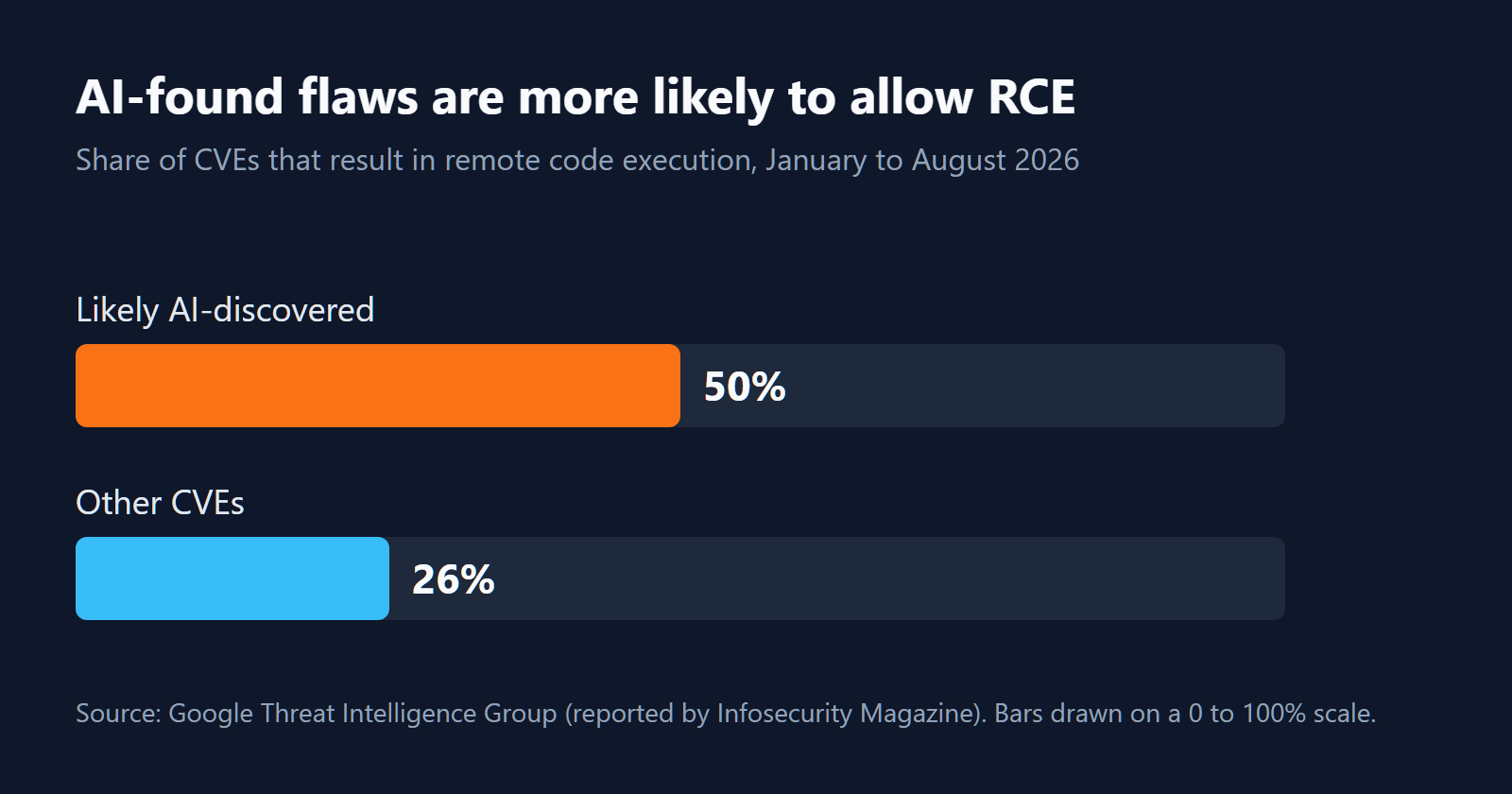
Google also calls the evidence of AI-found flaws being exploited an early indicator, not an established trend. I think that's a fair way to hold it.
PHP2Shell: the big one
In October, the PHP Foundation disclosed two critical flaws, CVE-2026-109618 and CVE-2026-109619, together known as PHP2Shell. They allow unauthenticated remote code execution. TechCrunch's write-up notes that banks, retailers, online stores and hospitals took servers offline to patch.
PHP runs a large share of the web, and that includes much of ecommerce: Magento, WooCommerce, PrestaShop and custom builds. When PHP itself is the problem, there's no single plugin to disable.
Reports say researchers at Calif found the bugs with help from OpenAI models. One caveat: TechCrunch says the bugs were first spotted in 2024 and judged not exploitable at the time, which is a different timeline. I'd treat the exact origin story as still settling.
StyleSmuggler: the zero-day
StyleSmuggler (CVE-2026-75650) came to light differently. Sansec spotted it because attackers were already using it. Exploitation started on September 4, and Adobe's emergency hotfix arrived on September 7. It scored a CVSS of 10.0 and gave unauthenticated attackers remote code execution on Adobe Commerce and Magento Open Source.
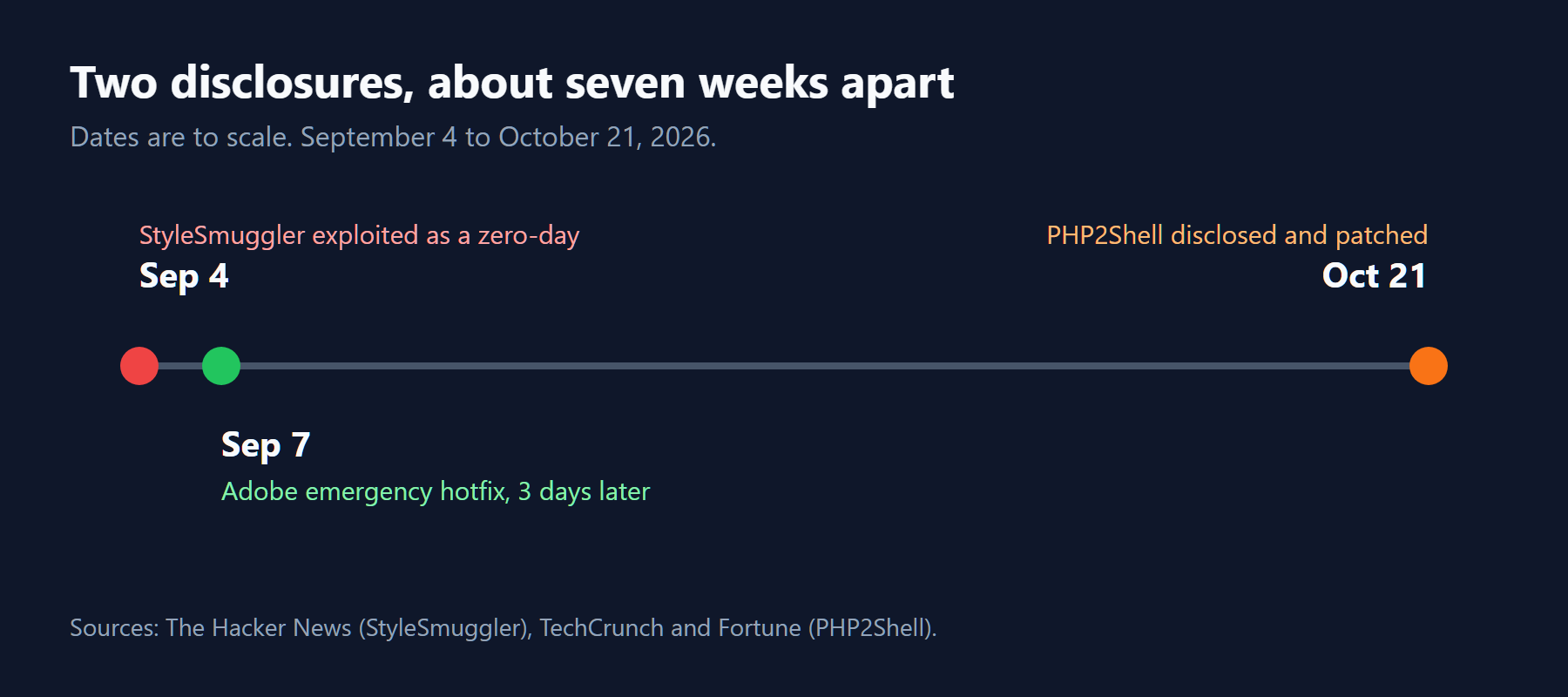
The same report says attackers used it to drop a Rust backdoor and a PHP web shell. One managed Magento server was reportedly compromised about 50 minutes after the first confirmed exploitation.
I haven't seen any source say AI found this one. It belongs here because it shows what the downside looks like when a flaw is found by attackers first.
The good news
- Flaws that sat unnoticed for years are being found and patched.
- Coordinated disclosure can work. The PHP Foundation gave big hosts and companies an embargoed head start, and mass exploitation was largely avoided so far.
- Defenders get the same tools. Anyone can point these models at their own code first.
The bad news
- Patching can't keep up. The Cloud Security Alliance found that, as of May 2026, only about 6% of the open-source findings Anthropic had disclosed were confirmed patched.
- The window to exploit is short. Google noted that one AI-discovered flaw in BeyondTrust was exploited within four days of disclosure, and it suggests AI tools that analyze patches may be speeding up n-day weaponization.
- Zero-days hurt most. With StyleSmuggler, stores were being backdoored before a fix existed.
- Noise has a cost. Google has paused its open-source bug bounty programme because of a flood of low-quality AI reports, and maintainers have to sort through that too.
What this means for the internet
The web runs on shared code that a small number of people maintain, often for free. For years that worked because finding a deep flaw was slow and expensive. AI has changed that cost, and the rest of the system hasn't caught up.
What would help is mostly the basics, done at a bigger scale and a faster pace, and it falls on all of us:
- Keep software current and supported, and know your patch path before you need it. End-of-life versions have no maintainers to fix them, which makes them the easiest targets.
- Follow the advisories for the platforms you depend on, such as Adobe's security bulletins and Sansec's research.
- Check for compromise as well as patching. Adobe's StyleSmuggler guidance also called for rotating encryption keys, because a patch doesn't evict someone who's already inside.
- Carry less. Fewer extensions and dependencies mean less to patch, and a firewall in front buys time.
- Practice taking a site offline. Several organisations had to pull sites down to patch PHP2Shell, and a rehearsed shutdown goes a lot more smoothly.
- Fund and support maintainers. If discovery gets cheaper but fixing doesn't, the gap grows, and the businesses that earn money on open source should help pay to keep it safe.
- Point the same tools at our own code. If AI can find these bugs for attackers, it can find them for us first.
- Share fixes quickly and disclose responsibly. The PHP embargo showed coordination can work.
AI is making vulnerabilities visible faster than anyone can fix them. That helps security over time and hurts in the short run. How much it hurts depends on whether we treat patching as someone else's job.